The table moves. The ticket moves with it.
Coursing, seat numbers, transfers between servers and a check that splits however the table decides it wants to split, at the point they decide it.
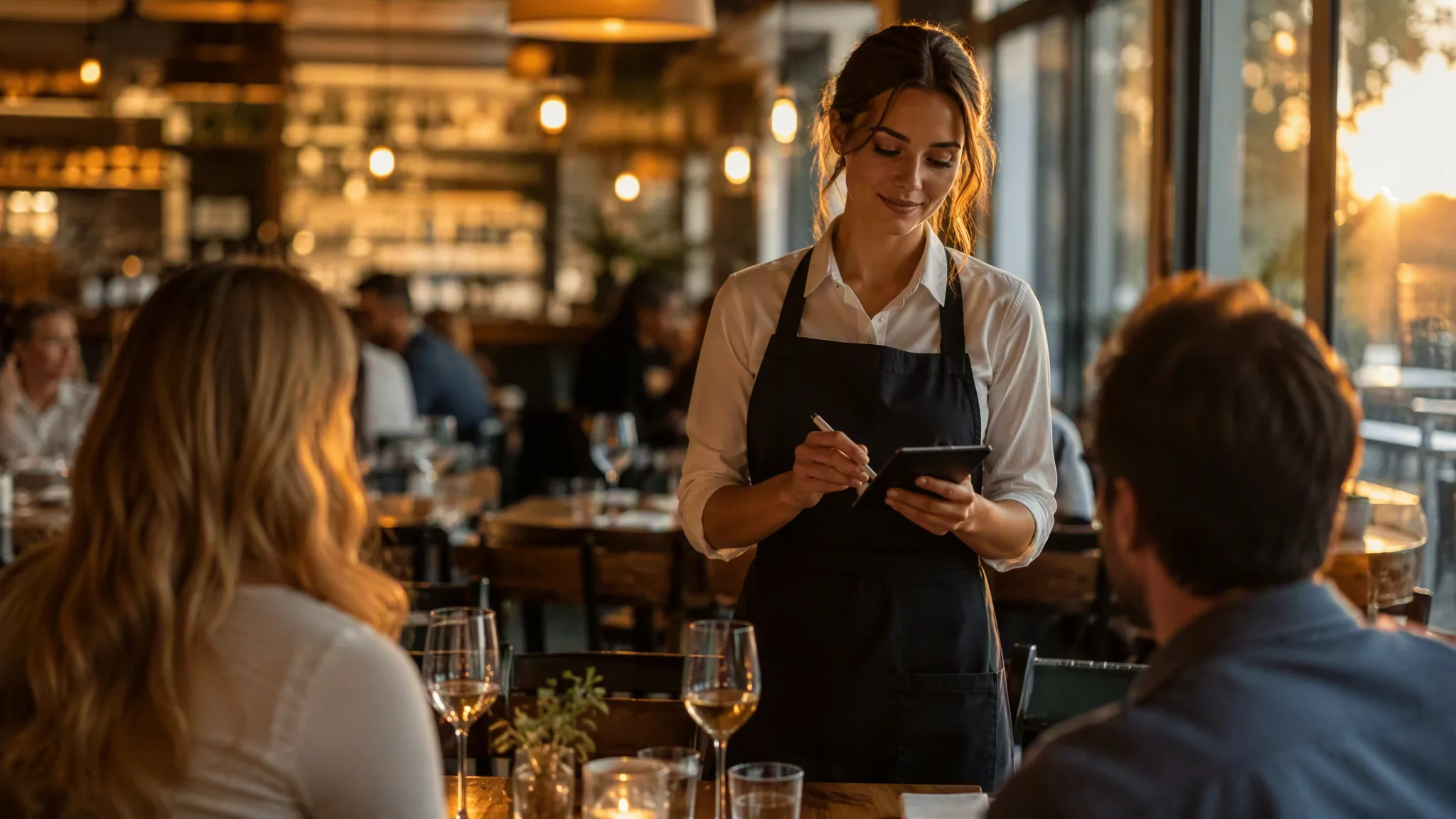
Dining room
Drag the party. The ticket follows.
Move a table without re-ringing it: the open check, the seat numbers and the server go with the guests. Coursing fires from the same screen, and a transfer between servers at shift change does not mean arguing about the tip.
What full service actually needs
Floor plan that matches the room
Your actual tables, in your actual layout. Drag a party to another table and the open ticket goes with them.
Coursing
Fire appetisers now and mains when the table is ready, without walking to the kitchen to say so.
Splits that survive the argument
By seat, by item, evenly, or three cards and one cash. Re-split after a payment has already gone through.
Payment at the table
Handheld takes the card, the tip and the signature without the guest handing anything over.
Transfers between servers
Shift change mid-meal does not mean re-entering the order or arguing about the tip.
Works when the internet does not
Orders keep going in and cards keep clearing. Everything syncs when the line comes back.
And a manager you can just ask
Oreon is built into the POS on every plan. It reads your own sales data and makes menu changes on request, showing you what it will do before it does it.
- Who had the highest average ticket last week?
Dana. $31.40 a ticket across 212 tickets, about 15% above the team average of $27.30.
# Staff Tickets Avg ticket 1 Dana 212 $31.40 2 Marcus 218 $27.10 3 Priya 190 $24.80 4 Leo 175 $22.15 Last 7 days
- When are my slowest hours this month?
Three to four in the afternoon. $412 across the whole month in that hour, against $6,900 at seven. If a shift has to go, that is the hour.
Hour Tickets Sales 3 PM 31 $412 4 PM 39 $538 2 PM 52 $790 9 PM 61 $1,020 Last 30 days, quietest first
Questions full-service owners ask
- Does JET POS handle coursing, a table map and seat numbers?
- Yes, all three. The floor plan is drawn as your actual room and a party dragged to another table takes its open check with it. Coursing fires appetisers now and mains when the table is ready from the same screen, without a walk to the kitchen. Seat numbers sit on every line of the ticket, which is what makes splitting by seat possible later.
- How does it split a check?
- By seat, by item, evenly, or any mix, for example three cards and one cash. A check can be re-split after a payment has already gone through, and a shared appetiser is divided across the seats that shared it.
- Can a server transfer a table at shift change?
- Yes. The open check, the seat numbers and the tip attribution move to the incoming server in one action. Nothing is re-rung and there is no argument about whose tip it was.
- Can we take payment at the table?
- Yes, on the handheld. It takes the card, the tip and the signature at the table, and the receipt prints or is sent by text. The card-present rate is the same as at the counter.
- Can the built-in AI change the menu, or only report on it?
- Both. Oreon, included on every plan, answers questions from your own sales data, such as which server had the highest average ticket last week or which five items sold worst this month. It also adds or removes items, changes prices and portion prices, marks items out of stock and edits modifiers when you ask, showing you the change and waiting for your confirmation before it commits.
- What does it integrate with?
- Uber Eats and DoorDash orders come into the POS and fire to the kitchen like any other ticket. Online ordering and card processing are built in, and there is a REST API for custom work. There is no marketplace of third-party apps and no payroll or accounting integration today; if your restaurant depends on one, tell us on the call and we will say plainly whether JET fits.
- What happens when the internet drops mid-service?
- Orders keep going in and cards keep clearing on the terminal. Everything syncs when the connection comes back, and the kitchen screens on the local network keep working throughout.
- Is there a long-term contract?
- Not on the software. Starter and Professional are month to month with no early termination fee. Free POS, which includes a terminal at $0, carries a one-year card processing agreement that pays for the hardware.
Other counters we run
Quick service
Counter service lives and dies on how long the fifth person in the queue has to stand there. Everything here is about that number.
Bar & lounge
Pre-auth on the card, rounds that go in fast, prices that change themselves at the hour, and a close-out that balances.
Diner
One menu that runs all day, a counter and a dining room on the same screen, and turns fast enough that the waiting list moves.
Ten minutes on the phone
We ask what you run today and what it costs you, then put a rate and a hardware list in writing. If staying where you are is cheaper, we say so.